
Posted by WatchPost Outfitters LLC. on Jul 16th 2026
Ontario Wildfire Smoke Guide: Protection Tips & Exposure Symptoms for US Residents

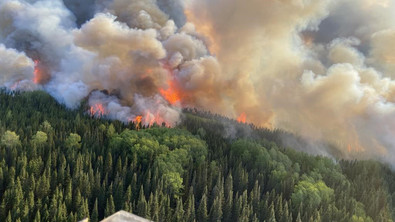
When massive wildfires in Ontario send smoke drifting across the border, the impact is felt far beyond Canada. Wind patterns carry microscopic particulate matter and toxic gases deep into the United States, blanketing states in the Midwest, Northeast, and mid-Atlantic under a hazardous haze.
Because these particles are small enough to bypass your respiratory tract's natural filtration and enter your bloodstream directly, protecting yourself requires understanding both the symptoms of exposure and the steps to secure your perimeter.
Symptoms of Wildfire Smoke Exposure
Even hundreds of miles away from the active burn, the drifting smoke plume carries concentrated pollutants. The population in surrounding US states may experience a range of health impacts depending on exposure levels and pre-existing conditions.
Common, Mild Symptoms (The Baseline)
These symptoms are typical for healthy adults exposed to moderate-to-high levels of drifted smoke:
-
Irritated, Watery, or Burning Eyes: Fine particulates and chemical compounds in the air cause immediate ocular inflammation.
-
Scratchy, Dry Throat and Coughing: Inhaled soot irritates the pharynx and triggers the cough reflex.
-
Running Nose or Sinus Congestion: The body produces excess mucus in an attempt to trap incoming particles.
-
Mild Headaches and Fatigue: Often caused by reduced oxygen intake and the inhalation of low levels of carbon monoxide.
Severe or High-Risk Symptoms (Action Required)
Certain groups—such as children, older adults, pregnant individuals, and anyone with asthma, COPD, or cardiovascular disease—are highly vulnerable. Monitor closely for:
-
Wheezing and Shortness of Breath: Indicative of airway constriction or an oncoming asthma flare-up.
-
Chest Pain, Pressure, or Rapid Heart Rate: Heavy exposure can strain the cardiovascular system, potentially triggering heart attacks in at-risk individuals.
-
Extreme Dizziness or Confusion: A sign of oxygen deprivation or carbon monoxide buildup.

Survival Tips to Protect Your Perimeter
To mitigate these health risks during an active drift event, you must build a multi-layered defense to isolate yourself from the compromised outdoor air.
1. Secure and Seal Your Shelter
Your home is your primary bunker, but it must be closed off from ambient air exchanges.
-
Lock Down Windows and Doors: Ensure all perimeter seals are closed. If you have drafty older windows, seal the gaps temporarily with low-residue painters tape or damp towels.
-
Recirculate Your HVAC: Set your home heating or cooling system to Recirculate rather than pulling in fresh (smoky) air from the outside. Ensure your system is equipped with a clean, high-efficiency furnace filter (ideally a MERV-13 or higher).
-
Run True HEPA Purifiers: Place standalone air purifiers in high-occupancy rooms. If you do not have one, you can construct an improvised, high-velocity air cleaner by sealing four MERV-13 filters to a standard box fan.
2. Deploy Proper Personal Protective Equipment (PPE)
When you must step outside, do not rely on basic face coverings.
-
N95 or KN95 Respirators Only: Surgical masks, bandanas, and cloth masks do not filter out microscopic $PM_{2.5}$ particles. You must use a well-fitted, NIOSH-approved respirator that forms a tight, unbroken seal around your nose and mouth.
-
Protect Your Eyes: Wear wrap-around safety glasses or sealed goggles to shield your eyes from chemical irritants and microscopic ash carried in the upper-level winds.
3. Harden Your Vehicle Cabin
If you must travel through high-AQI zones, override your vehicle's default climate settings.
-
Max A/C Recirculate: Keep windows rolled up and run the air conditioning strictly on recirculate.
-
Upgrade Cabin Filters: Swap your standard vehicle cabin air filter for one containing activated carbon, which actively neutralizes toxic chemical gases and strong odors alongside physical soot particles.
4. Eliminate Indoor Contaminants
When your home is completely sealed, any internal combustion or cooking emissions will pool inside.
-
Avoid Frying or Broiling: High-heat cooking releases massive amounts of indoor grease and smoke particulates.
-
Do Not Use Woodstoves, Candles, or Incense: Keep open flames to zero.
-
Damp Dust Only: Do not use standard vacuums unless they have a sealed HEPA filter system; otherwise, they will simply spray settled fine dust back up into your breathing zone. Use damp mops or micro-fiber cloths instead.