
Posted by WatchPost Outfitters LLC. on Aug 15th 2026
Stronger Together on the Trail: The Health Benefits of Social Hiking, Body Prep, and Essential Gear | Watchpost Outfitters
Heading into the backcountry with a crew transforms outdoor recreation from a simple workout into a dynamic, shared experience. Beyond the memories made around the fire, social hiking and group camping deliver measurable physical, mental, and emotional benefits.
To reap the full rewards of the trail without injury or burnout, physical preparation and proper gear staging are just as critical as the company you keep.
1. The Health and Social Benefits of Group Adventures
-
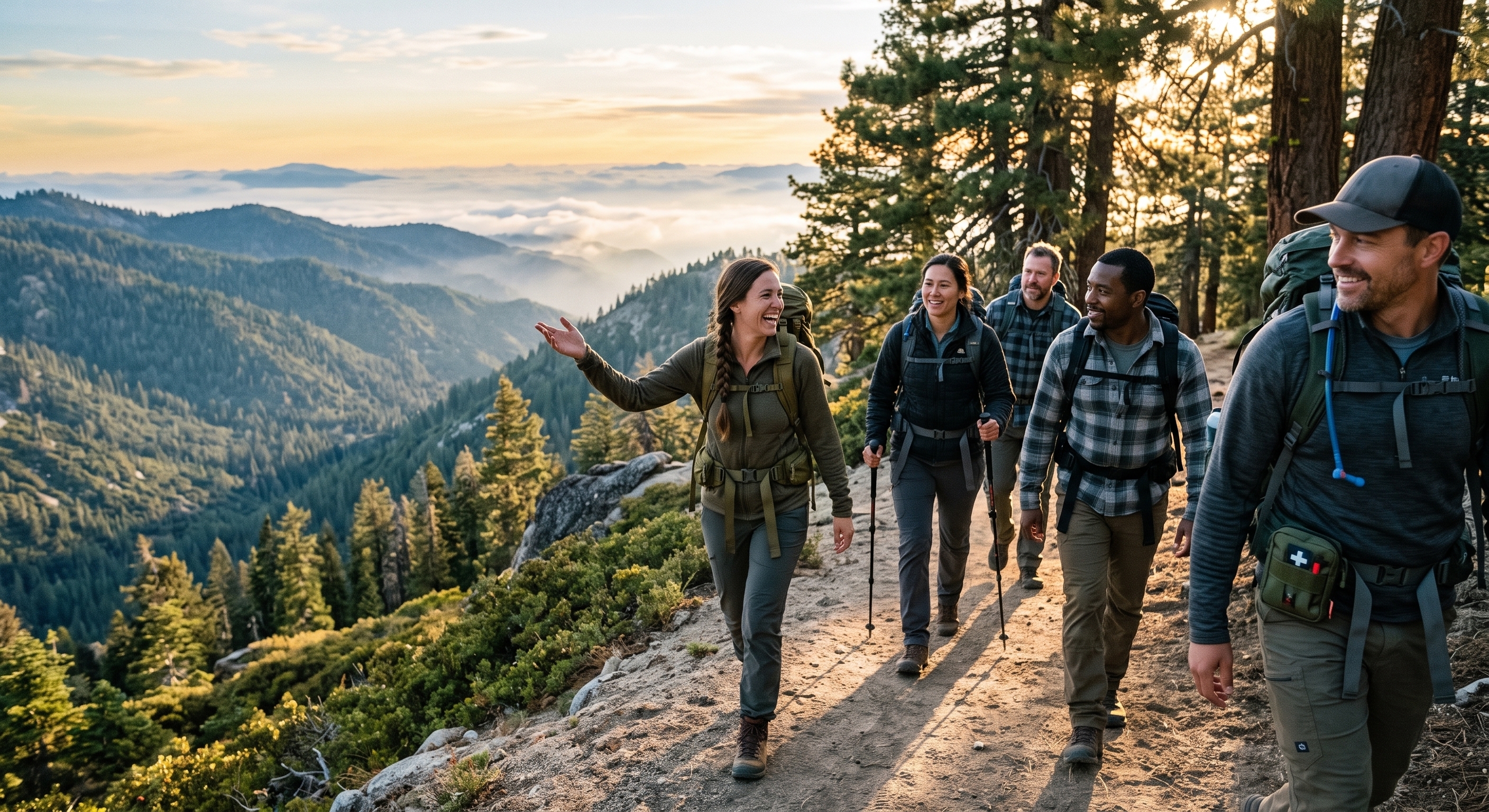
Enhanced Physical Performance (The Köhler Effect): Hikers naturally push their endurance and pace when moving in a group. Seeing trail partners maintain a steady stride through steep ascents builds communal motivation.
-
Natural Aerobic Pacing: Conversing while climbing naturally regulates your exertion into Zone 2 cardio, building cardiovascular endurance without premature exhaustion.
-
Mental Reset & Stress Reduction: Time in green spaces lowers cortisol levels and blood pressure. Combined with face-to-face social connection, outdoor adventures release oxytocin and endorphins, melting away everyday anxiety.
-
Circadian Rhythm Alignment: Sleeping under the stars away from artificial blue light resets internal sleep cycles, improving REM quality and deep restorative sleep.
-
Shared Safety & Confidence: Traveling in groups provides collective navigation, faster emergency response, and the confidence to take on more rugged terrain.
2. How to Prepare Your Body for Hiking and Camping
Tackling uneven terrain with weight on your back demands stability, endurance, and joint resilience. Start conditioning 4 to 6 weeks before a major trek:
-
Weighted Rucking: Walk with a loaded backpack (start with 15–20 lbs and build up) 2–3 times per week to adapt your traps, shoulders, and lower back to load carriage.
-
Eccentric Lower-Body Strength:
-
Step-downs and lunges: Strengthen the quadriceps and patellar tendons to absorb shock during steep descents.
-
Single-leg calf raises: Build ankle stability to protect against rolls on loose rock and uneven roots.
-
-
Core and Posterior Chain Conditioning: Planks, farmer's carries, and Romanian deadlifts reinforce spinal alignment under pack load.
-
Mobility & Ankle Prep: Dedicate 10 minutes post-workout to hip flexor stretches, hamstring mobility, and dynamic ankle circles to maintain a full range of motion on rough ground.
-
Pre-Trip Hydration Loading: Begin tracking water and electrolyte intake 48 hours prior to stepping onto the trail to prevent cramping and early fatigue.
3. Essential Gear Checklist for a Safe, Healthy Outing
Proper staging ensures safety and minimizes physical strain. Focus on reliable, modular essentials:
| Category | Must-Have Gear | Health & Safety Purpose |
| Footwear & Apparel | Moisture-wicking socks, broken-in trail boots, weather layers | Prevents friction blisters, regulates core temperature, prevents hypothermia |
| Load Carriage | Ergonomic backpack with padded hip belt, EDC cross-body pouch | Distributes load weight to hips; keeps critical safety tools instantly accessible |
| Hydration & Nutrition | Water filter/purifier, electrolyte tablets, high-calorie dense fuel | Prevents waterborne pathogens, dehydration, and glycogen depletion crashes |
| Navigation & Comms | Topo map, compass, satellite communicator/GPS, power bank | Prevents disorientation and enables emergency communication in dead zones |
| Trauma & First Aid | Compact IFAK (tourniquet, pressure dressing, blister kit, splint) | Immediate response for sprains, lacerations, or backcountry emergencies |
| Shelter & Sleep System | Rated sleeping bag, insulated ground pad, weather-resistant tent | Prevents ground-conducted heat loss; ensures deep physical recovery |
| Illumination & Tools | Headlamp with extra batteries, reliable multi-tool or fixed blade | Hands-free night navigation, campsite maintenance, and emergency utility |
4. Group Organization and Trail Protocol
-
Match the Pace to the Sweep: Always set the group rhythm based on the slowest hiker, placing an experienced member at the back (the "sweep") to ensure no one is separated.
-
Distribute Group Gear: Share heavy items—like multi-person shelters, camp cook sets, and primary water filtration systems—evenly across the crew.
-
Carry Personal Redundancies: Even in a group, every member must carry personal water, emergency food, a headlamp, and a lightweight first aid pouch.