
Posted by WatchPost Outfitters LLC. and AI on Sep 2nd 2026
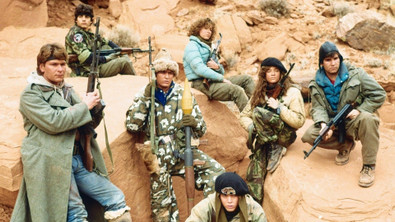
The Overlooked Warning Signs of Red Dawn in Modern America
Red Dawn didn’t start with paratroopers over a high school. It started with a southern border breach, collapsed European treaties, and pre-positioned saboteurs cutting the power grid.
Hollywood didn’t invent a fantasy in 1984—it outlined an asymmetric blueprint.
Read our full breakdown of modern infrastructure threats and what you need in place before zero-hour
The Overlooked Warning Signs of Red Dawn in Modern America
When John Milius directed Red Dawn in 1984, critics treated the central conceit as Cold War camp. What captivated theatergoers was the spectacle: Soviet and Cuban paratroopers descending out of an autumn sky onto a high school football field in Calumet, Colorado.

Yet the invasion did not begin in the sky. It began in the opening text crawl—a clinical, matter-of-fact breakdown of quiet domestic rot, broken international treaties, agricultural failure, and systemic border subversion.
Four decades later, the United States is not facing an overnight aerial drop of mechanized infantry. Modern global conflict operates on asymmetric, hybrid terms. However, the structural cracks, strategic blind spots, and domestic vulnerabilities setting the stage for national paralysis match the opening minutes of Red Dawn with chilling accuracy.
1. The Geopolitical Scaffolding: Fracturing Alliances and Strategic Isolation
In the 1984 backstory, the United States found itself strategically isolated. European nations withdrew from NATO following political shifts and energy dependencies, leaving the American homeland without a forward defense network or allied early-warning buffer.
Today, the framework of Western security faces its most severe strain in over half a century:
-
The Multipolar Coalition: The deepening axis among Beijing, Moscow, Tehran, and satellite partners in Latin America operates as an active counter-weight to Western leverage, coordinating economically, digitally, and militarily.
-
Alliance Fatigue: Ongoing conflicts abroad have drained domestic munitions reserves, strained manufacturing bases, and ignited deep domestic skepticism regarding long-term foreign military entanglements.
-
The Latin American Staging Ground: In Red Dawn, hostile regimes across Central and South America served as the staging points for continental infiltration. Today, massive foreign state investment in deep-water ports, telecommunications backbones, and dual-use logistics facilities across South and Central America has established identical logistical footholds right in the hemisphere.

2. The Porous Border and Fifth-Column Infiltration
The tactical catalyst in Red Dawn was not a direct naval assault on coastal cities; it was covert infiltration. Cuban and Nicaraguan operatives slipped through commercial transit routes and border crossings disguised as routine civilian traffic, disabling Strategic Air Command installations and communications hubs from within before frontline conventional forces ever crossed the frontier.
The contemporary security environment mirrors this operational pattern:
-
Uncontrolled Corridors: Multi-year records of unmonitored border entries have seen tens of thousands of military-age males from adversarial and hostile nations transit domestic borders without vetted identities or known destinations.
-
Cartel Hybrid Networks: Transnational criminal organizations maintain operational control over crossing sectors using commercial drone fleets, encrypted communications, and counter-surveillance tactics, demonstrating capabilities once limited to sovereign military units.
-
Pre-positioned Infrastructure Sabotage: Federal intelligence agencies have issued blunt public warnings regarding foreign state actors actively embedding malware within American municipal water systems, civilian energy grids, and regional transit hubs. The objective is not immediate destruction, but the capability to plunge the interior into chaos on command.
3. The Modern Parallels: Hollywood Narrative vs. Reality
| Red Dawn (1984) Catalyst | Modern Parallel | Prepper Operational Mandate |
| Form 4473 Weapon Registries: Occupation forces immediately seize federal gun purchase records from sporting goods shops. | Digital Tracking & Surveillance: Merchant Category Codes (MCC) applied to firearms dealers, centralized background check databases, and digitized transaction records. | Support private, lawful analog acquisitions; safeguard physical records; prioritize modular, standard-caliber defensive systems. |
| Agricultural & Food Rationing: Soviet wheat harvest failures create domestic rationing, driving resource panic. | Fragile Just-in-Time Logistics: Centralized food supply lines with single points of failure; diesel shortages; hyper-dependent retail distribution with a 72-hour failure window. | Maintain at least 6–12 months of calorie-dense, shelf-stable stores; develop local seed vaults and independent community food networks. |
| Urban Sieges & Isolations: Denver is surrounded and choked off from external food and utility supplies. | Grid-Down Metro Collapse: High-density cities operate on continuous external inputs of water, power, and sanitation. Civil unrest and supply cuts convert urban cores into non-viable zones within days. | Establish early zero-hour triggers; prepare primary and secondary bug-out routes avoiding bottleneck interstates. |
| Underground Radio Networks: "Radio Free America" and rebel civilian shortwave guide the resistance. | Centralized Telecommunications Killswitches: Internet service provider shutdowns, satellite disruption, and cellular blackouts during national emergencies. | Deploy decentralized communication gear: GMRS, HF/HAM radio, Meshtastic networks, and physical paper navigation maps. |
4. What a Modern "Invasion" Actually Looks Like
An asymmetric offensive against the United States does not require millions of foreign soldiers marching down Main Street. A 21st-century attack relies on paralyzing the homeland from within:
-
Step 1: Grid & Infrastructure Severance. High-altitude electromagnetic pulse (HEMP) detonations or synchronized physical attacks on high-voltage substations take down the regional or national power grid, instantly halting municipal water pumping, digital transactions, and emergency response.
-
Step 2: Information Warfare & Domestic Paralysis. Hostile digital units weaponize internal political fractures, amplifying unrest, looting, and street-level conflict to keep municipal law enforcement and National Guard units pinned down defending their own stations and city halls.
-
Step 3: Strategic Supply Choke. As civilian order breaks down, vital trade hubs, deep-water ports, and energy transport nodes are secured or severed by foreign-backed proxy entities, leaving regional populations isolated and dependent.
5. Survivalist Directives: The Wolverine Doctrine
The teenagers in Red Dawn survived not because of heavy firepower, but because they held tactical mastery over their immediate environment, maintained unbreakable trust, and accepted that external help was not coming.
Surviving the opening phases of systemic collapse demands the same priorities:
-
Build Local Mutual Assistance Groups (MAGs): Lone survivalists do not survive prolonged collapse. Security shifts, medical triage, and perimeter defense require numbers. Build a trusted, close-knit circle of family and neighbors with complementary, real-world skills.
-
Harden Decentralized Communications: Assume cell towers and the commercial internet will fail in the first 30 minutes of a major incident. Establish pre-configured, off-grid mesh networks (such as Meshtastic) and licensed GMRS/HAM stations with independent solar backup.
-
Decouple from Centralized Systems: Eliminate your dependence on the continuous operation of the grid. Store deep water reserves with gravity-fed filtration, stock non-hybrid seeds, maintain off-grid electrical generation, and preserve physical currency and barter items.
-
Know Your Ground: Map your local terrain in detail. Identify rural bypass routes, clean unmapped water sources, natural defensive choke points, and cache locations within your operating area.
The warning of Red Dawn was never just about a fictional invasion. It was a study in what happens when the institutional guardrails of a nation fail simultaneously. Those who survive are not the ones who expect rescue, but the ones who saw the signs and built their resilience before the first sirens sounded.